1.The heart of the matter
2.Your starting point
3.Your support/ base/ foundation
4.Your chance/ what will aid you
5.A problem that's being solved
6.A desire that's being fufilled
7.New knowledge and insights
Have A Look Around
- About Paganism
- African Orisha
- Asian Gods
- Beltane
- Book Reviews
- Brazilian Gods
- Buddhist Gods
- Candle Magick
- Celtic Gods
- Charms
- Christian Truths
- Crafts
- Deviant Witchery Show
- Druidry
- Egyptian Gods
- Elements
- Foods
- Greek Gods
- Hawaiian Gods
- Herb Lore
- Hindu Gods
- Imbolc
- Litha
- Memes
- Music
- Norse Gods
- Ostara
- Pagan Art
- Palmistry
- Poetry
- Prayer-Spell-Chant
- Recipes
- Ritual Preparation
- Ritual Tools
- Spirit Guides-Totem Animals
- Stones/Gems
- Symbols/Alphabets
- Tarot
- Videos
- Wiccan
- Zodiac
Tuesday, July 15, 2014
Monday, July 14, 2014
Wicked Enchantments: A History of the Pendle Witches and their Magic by Joyce Froome
Title: Wicked Enchantments: A History of the Pendle Witches and Their Magic
Genre: History/Study/Pagan/Witchcraft
Author: Joyce Froome
Buy Link: http://amzn.to/1oWdzuM
I bought this book on the recommendation of a trusted friend who's a fellow Pagan. While I don't normally read studies since I find them far too similar to school work, this one was slightly different. This one was about a topic I wanted to know about. This book is about the Witch Trials that took place in England in 1600's, more specifically the case of the Device family of Malking Tower in the Pendle Forest.
I will begin this review by saying that while, again, I'm not a fan of studies, this book has so many interesting things in it, that even with it being a history lesson, it was still intriguing. I particularly liked the remakes of the spells the Cunning Folk used in the 1600's. I found it fascinating to see how much spell casting has changed through centuries and yet still even though we cast differently today, they are still very similar to each other in so many ways.
The study itself is heart wrenching. Witch against Witch, accused against enemy, worst of all; young children forced to testify against their families; and forced to live with the knowledge that their statements helped get them killed. It didn't help that the Assizes were a madhouse and hardly anyone was able hear what they were accused of.
I also liked how snippets of the actual propaganda pamphlets were integrated into this book along with actual statements, and photographs of re-enacted spells. It gives the reader a better understanding of how things were done or made to seem.
I found a single error in this work on page 145, other than that the editing was flawless.
This book would be an asset to any witch that enjoys reading up on our histories even if they aren't from England, after all, we are all brothers and sisters in the craft.
I would also suggest this book to anyone curious to understand why we witches stand so united now and why we always remember the Burning Times.
I give this book 5 of 5 pentacles.
Friday, July 11, 2014
[CM] Virmir
(art by: http://thanshuhai.deviantart.com/)
African Orisha: Shango
In the Yorùbá religion, (also spelled, Sango, Shango, often known as Xangô or Changó in Latin America and the Caribbean, and also known as Jakuta) (from '=shan, 'to strike') is perhaps one of the most popular Orisha; also known as the god of fire, lightning and thunder. Shango is historically a royal ancestor of the Yoruba as he was the third king of the Oyo Kingdom prior to his posthumous deification. In the Lukumí (Olokun mi = "my dear one") religion of the Caribbean, Shango is considered the center point of the religion as he represents the Oyo people of West Africa, the symbolic ancestors of the adherents of the faith. All the major initiation ceremonies (as performed in Cuba, Trinidad, Puerto Rico and Venezuela for the last few hundred years) are based on the traditional Shango ceremony of Ancient Oyo. This ceremony survived the Middle Passage and is considered to be the most complete to have arrived on Western shores. This variation of the Yoruba initiation ceremony became the basis of all Orisha initiations in the West.
Following Oduduwa, Oranyan and Ajaka, Sango (or Jakuta) was the third Alafin (king) of Oyo. In Professor Mason's mythological account of heroes and kings, contrary to his peaceful brother Ajaka, he was a powerful and even violent ruler. Moreover, he is said to have had supernatural forces because he could produce thunder and lightning. He reigned for seven years, the whole of which period was marked by his continuous campaigns and his many battles. The end of his reign resulted from his own inadvertent destruction of his palace by lightning. During his lifetime, He was married to three wives namely Osun, Oba and Oya. Oya (who is his favorite) was a mystical creature who can transform into human form although is basically an animal.
The religious ritual of Shango was possibly designed in order to help the devotees of Shango gain self-control. Shango's beads tell the story of "his" essence, the logic of Obatala (white) alternating in balance with the fire of Aganju (red) in passion towards some goal. Historically, Shango brought prosperity to the Oyo Empire during his reign. After his deification, the initiation ceremony of the cult of his memory dictates that this same prosperity be bestowed upon followers, on a personal level. According to Yoruba and Vodou belief systems, Shango hurls bolts of lightning at the people chosen to be his followers, leaving behind imprints of stone axe blades on the Earth's crust. These blades can be seen easily after heavy rains. Veneration of Shango enables—according to Yoruba belief—a great deal of power and self-control.
Shango altars often contain an often-seen carved figure of a woman holding her bosom as a gift to the god with a single double-blade axe sticking up from her head. The axe symbolizes that this devotee is possessed by Shango. The woman's expression is calm and cool, expressing the qualities she has gained through her faith.
An oshe shango, or dance wand, is carried by devotees at the annual festival for Shango.
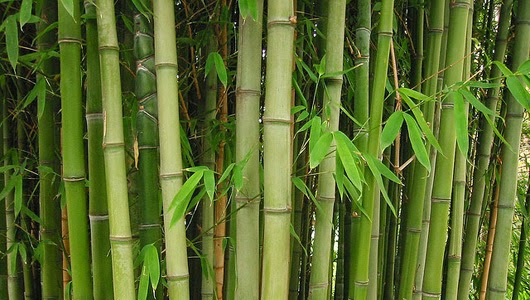
Bamboo
Bamboo is used for Hex breaking, wishes, luck and protection. Carve a wish into bamboo and bury it in a secluded area to make your wish come true. Carry a piece of bamboo for good luck.
Plant bamboo in pots around your house, to bring long life and good health to those who live there.
In some Taoist rituals, bamboo is used as a wand in ceremonies calling upon water entities.
Hollow out a piece of bamboo, fill it with spell components and seal the ends with wax. Carry it with you, or place it in your home, as needed.
In Scott Cunningham’s Encyclopedia of Magical Herbs, the author recommends using bamboo by carving your wish into a stalk, and then burying it in the ground someplace secluded. He also suggests using it to break hexes by crushing the dried wood into a powder and burning.
Use a long dried piece as a handle for a magical besom, and sweep bad energy out of your home.
In Japan, bamboo walls are believed to protect Shinto shrines from evil spirits. Plant a row of them in your yard, or in pots on your windowsills, to keep negative energies out.
Find ways to incorporate bamboo into magical tools, such as cups, wands, even planters for your herbs.
The bamboo plant lives a long time, and will just continue growing until it is harvested. Because of this, some Pacific Island tribes regard it as a symbol of longevity and life, and include bamboo in some creation stories. In some parts of the Philippines, bamboo crosses are placed in the fields to bring hearty crops in at harvest time. In parts of India, bamboo symbolizes friendship.
In some Eastern religions, bamboo is the only acceptable material for certain ceremonial objects.
A number of Asian poets have written tributes to this hardy plant. In particular, some of Japan’s early female poets, like Cho Koran, have sung its praises.
Ajoite
Ajoite is used to Release Emotions, for Peace, and for Powerful Healing
Ajoite is known in the metaphysical world as a stone of peace and harmony. It is said to help release and overcome sorrow, anger, fear, and heal old emotional wounds.
Ajoite is also used to help connect to the Higher Self and God/Universe/Goddess/All That Is. It is an excellent aid for meditation.
Ajoite is noted in metaphysics to be able to remove and release negative energies from the physical, emotional, and etheric bodies. It is said to act as a stone of transformation, bringing change and growth.
Ajoite is related to and excellent for work with the throat and heart chakras.
Ajoite is a great stone for spiritual healers and spiritual seekers, and is said to be a very powerful healing booster.
Subscribe to:
Posts (Atom)